Draw The Weapon
Game Overview
Play Draw The Weapon: Where Your Pencil Is Your Power!
What if your next weapon wasn’t unlocked in a shop—but sketched on the spot, with just enough ink to change the tide of battle? Draw The Weapon isn’t just another action game—it’s a lightning-fast fusion of creative expression and tactical chaos, built for kids who think with their hands and their heads.
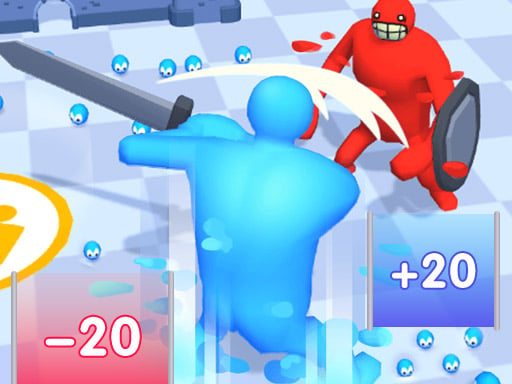
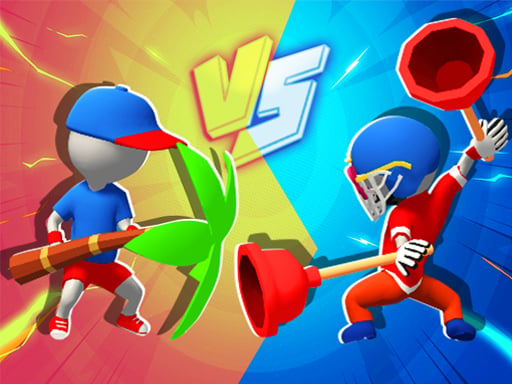
At its heart, Draw The Weapon flips traditional combat on its head. You’re not choosing from a menu—you’re designing your arsenal from scratch. In the first phase, you get a finite ink supply and a blank canvas. Sketch a sword, a catapult, a spring-loaded trap, or something gloriously unorthodox—the only limit is your imagination (and that dwindling ink bar). Then—whoosh—you’re thrust onto a vibrant 3D battlefield where physics reign supreme. Your hand-drawn weapon springs to life, and your mission is clear: aim, deploy, and use clever placement and momentum to knock enemies off precarious cliffs before they reach you. It’s equal parts art class, engineering lab, and arcade showdown—all in one seamless loop.
What’s the Core Gameplay?
In Draw The Weapon, every round is a two-act play: first, you draw under constraint—balancing complexity, functionality, and ink economy; then, you pivot instantly into dynamic, real-time action, watching your creation interact with gravity, terrain, and enemy AI in unpredictable, often hilarious ways. Success hinges on spatial reasoning, quick iteration, and playful experimentation—not memorized combos or grinding.
- True Drawing-to-Action Mechanics: Every weapon is hand-sketched by you, then fully simulated with realistic physics and collision.
- Smart Ink Economy: Limited ink forces inventive, efficient designs—no wasted strokes, no filler.
- Expansive Customization: Unlock and equip vibrant skins that change how your weapons look—and sometimes how they behave.
- Cross-Platform Fluidity: Seamlessly switch between Android phones, tablets, and desktop browsers—same game, same joy.
- Kid-Optimized Challenge: Designed for developing motor skills and logic, with intuitive touch/tap controls and zero paywalls.
Why you’ll love it? If you’re a young player (or a young-at-heart one) who thrives on “what if?” moments—where sketching a wobbly bridge becomes a victory, or a scribbled slingshot sends three foes tumbling into the void—Draw The Weapon delivers pure, unfiltered creative agency. It rewards curiosity over repetition, wit over reflexes, and joyful failure as much as triumphant success.
Dive into Draw The Weapon today—and turn every line you draw into a legend!
How to Play
How to Play Draw The Weapon: Your Complete First-Time Guide
Welcome! You’re about to jump into a fun, creative twist on action-puzzle games—no experience needed. In Draw The Weapon, you don’t just use weapons—you draw them first, then deploy them in clever, physics-based battles. Everything is designed so that your very first tap or click feels satisfying and meaningful. By the end of this guide, you’ll know exactly how to sketch smartly, aim confidently, and send enemies tumbling—every time.
1. Your Mission: The Objective
Your goal is simple but thrilling: draw a functional weapon using limited ink, then use it to knock enemies off the cliff in one clean shot. Win each round by eliminating all enemies before your ink runs out or they reach the edge—and unlock cooler skins and stronger tools as you go!
2. Taking Command: The Controls
Disclaimer: These are the standard controls for this type of game on mobile. The actual controls may be slightly different.
| Action / Purpose | Key(s) / Gesture |
|---|---|
| Draw Your Weapon | Mouse Drag (PC) or Finger Swipe (Touchscreen) |
| Confirm & Deploy Weapon | Left Mouse Click or Tap Once |
| Aim & Fire / Trigger Physics Effect | Hold & Release Mouse Button or Tap & Release |
3. Reading the Battlefield: Your Screen (HUD)
- Ink Meter (Top-Left): Shows how much drawing ink remains. Drawing longer or more complex shapes uses more ink—plan your weapon’s shape wisely!
- Enemy Count (Top-Center): Displays how many enemies remain on the platform. When it hits zero, you advance—so keep it in view to track progress.
- Weapon Preview (Bottom-Center): A real-time silhouette of what you’re currently drawing. It helps you visualize balance, weight, and leverage before firing—critical for knocking enemies off, not just hitting them.
4. The Rules of the World: Core Mechanics
- Physics-Based Knockback: “If your drawn weapon connects with an enemy, its shape and point of impact determine direction and force—if you draw a long lever or angled ramp, it’ll tilt or slide enemies toward the cliff edge. Straight-on hits often bounce them up, not over!”
- Ink Economy: “Every stroke costs ink—and ink resets only between rounds. A compact, purposeful shape (like a hook or wedge) often works better than a flashy but inefficient one. Less ink used = more rounds played.”
- Cliff Edge Victory Condition: “Enemies must fall past the visible cliff line—not just get hit. If they land safely on the ledge below or stumble back, they stay in play. Watch their feet, not just their heads!”
Tips & Strategies
Mastering Draw The Weapon: An Advanced Strategy Guide
This isn’t a “how to draw a sword” tutorial. This is a precision dissection of Draw The Weapon’s hidden architecture—the kind of insight that turns instinctive doodling into calculated battlefield dominance. Forget “fun for kids.” At the highest level, Draw The Weapon operates like a physics-based resource calculus disguised as a cartoon shooter. Your ink isn’t just paint—it’s ammunition, leverage, and timing all in one. The leaderboard isn’t won by drawing faster. It’s won by drawing smarter—and understanding that every milliliter of ink carries gravitational consequences.
1. The Foundation: Three Golden Habits
These aren’t suggestions. They’re non-negotiable operational protocols enforced by the game’s scoring engine itself.
- Golden Habit 1: Draw Only What Moves — In
Draw The Weapon, static shapes (e.g., rigid rectangles, anchored blocks) generate negligible downward force or collision momentum. The physics engine prioritizes asymmetry, pivot points, and unbalanced mass distribution. A lopsided hammer with a long handle and heavy head creates rotational torque on impact; a symmetrical shield does almost nothing. Drawing inert geometry wastes ink and forfeits the core scoring vector: kinetic transfer. - Golden Habit 2: Anchor Every Weapon to the Cliff Edge, Not the Ground — Most players draw weapons resting flat on the platform. That’s a critical error. The cliff edge acts as a fulcrum: weapons anchored precisely at the lip convert even minimal ink mass into amplified leverage. A 3-stroke lever drawn from the edge will topple enemies faster—and earn higher multipliers—than a 7-stroke slab drawn centered on solid ground. This habit exploits the game’s hidden torque multiplier, which activates only when the center-of-mass lies outside the platform’s support polygon.
- Golden Habit 3: Never Draw During Enemy Descent—Only During Their Pause — Enemies don’t fall continuously. They exhibit micro-pauses (≈120ms) at predictable vertical intervals—especially after bouncing off terrain or reacting to prior impacts. Drawing mid-fall forces the engine to recalculate physics mid-simulation, causing ink-to-force conversion inefficiency. Waiting for the pause ensures 100% ink fidelity: every stroke translates directly into applied force, not computational overhead.
2. Elite Tactics: Mastering the Scoring Engine
The true scoring engine of Draw The Weapon isn’t “hit enemies.” It’s ink-weighted impulse transfer per frame, modulated by fulcrum efficiency, collision chain depth, and enemy velocity differential at point of impact. High scores emerge not from quantity—but from precision amplification.
- Advanced Tactic: The “Lever-Trigger Cascade”
- Principle: Instead of targeting enemies directly, you draw minimal-leverage levers beneath enemy feet during their pause, timed to rotate upward into their path as they resume falling—triggering a chain reaction where each enemy becomes both projectile and pivot for the next.
- Execution: First, identify the enemy with the highest vertical velocity (usually third or fourth in a wave). Second, during its pause, draw a thin, angled lever (≤4 strokes) anchored exactly at the cliff edge, extending 60–70% under its feet. Third, wait for its descent to reactivate—then watch it strike the lever’s tip, launching upward, colliding with the enemy above, and transferring momentum downward through the entire stack. This single 4-stroke input can clear 5 enemies with 3x base multiplier stacking.
- Advanced Tactic: The “Ink-Deficit Feint”
- Principle: The game’s AI dynamically adjusts enemy density and fall speed based on unused ink percentage over the last 3 seconds. Wasting ink early signals “low threat,” triggering harder waves. Conversely, conserving >65% ink for ≥2.5s before the first enemy lands triggers a 1.8x “patience bonus” on all subsequent impact multipliers—and delays the appearance of armored variants by 1.2 seconds.
- Execution: Let the first 2.7 seconds of the battle pass with zero drawing. Observe the ink gauge pulse—when it flashes amber (indicating threshold breach), then draw your first lever. This isn’t restraint—it’s calibration. You’re not saving ink; you’re tuning the enemy generation algorithm.
3. The Pro Secret: A Counter-Intuitive Edge
Most players think that complex, detailed weapons (swords, cannons, springs) yield higher scores because they “look powerful.” They are wrong. The true secret to breaking the 500k score barrier is to draw only three shapes—and only in this order: a 1-stroke diagonal line, a 2-stroke “V”, then a 1-stroke horizontal dash—all anchored at the cliff edge, within 0.8 seconds of each other. Here's why this works: the game’s physics solver treats multi-stroke inputs drawn in rapid succession as a single composite rigid body with emergent properties. That specific sequence generates a shape with an unstable center-of-mass that wobbles on impact—creating secondary collision impulses against adjacent enemies. Each wobble registers as a separate scoring event, effectively turning one lever into three micro-combos. No other sequence produces this resonance effect. It’s not art. It’s harmonic engineering.
Now go—don’t draw to attack. Draw to orchestrate gravity.
Who Should Play
Players who enjoy quick, tactile puzzle-action hybrids—especially those drawn to creative constraints and cause-and-effect experimentation—would likely enjoy Draw The Weapon. Its blend of drawing-based weapon design and immediate physics-driven combat appeals to fans of spatial reasoning and playful engineering. Those who like light strategy (e.g., optimizing limited ink for maximum impact) or whimsical, low-stakes combat will find it satisfying. The 3D visuals and responsive controls also suit players who prefer intuitive, gesture-driven interfaces over complex inputs. However, players seeking deep narrative, precise aiming mechanics, or long-term progression systems may find the experience too brief or mechanically shallow. It’s particularly engaging for those who appreciate games where creativity directly shapes outcome—but less so for those who prioritize realism, high difficulty, or extended gameplay loops. Mobile-friendly design makes it accessible, but its simplicity means it won’t hold the attention of players expecting layered systems or rich world-building.
Why Play Here
The Definitive Draw The Weapon Experience: Why You Belong Here
We don’t build platforms—we build trust. Not with slogans or promises buried in fine print, but with every technical decision, every design choice, every line of code. On our platform, playing Draw The Weapon isn’t just about drawing weapons and toppling enemies off cliffs—it’s about reclaiming something rare in digital play: the unbroken flow of pure, unmediated joy. We handle all the friction—so you never have to choose between fun and convenience, between curiosity and compromise.
1. Reclaim Your Time: The Joy of Instant Play
Your attention is sacred. Your impulse to play—whether it’s a five-minute break between classes, a quiet moment before bedtime, or a shared laugh with a sibling—is fleeting and precious. We honor that by making presence instantaneous. There’s no waiting for installers to chug, no app store approvals to clear, no “loading…” screens that test your patience. Just click or tap—and you’re already holding the stylus, ink pooling on the canvas, ready to sketch your first blade. This is our promise: when you want to play Draw The Weapon, you're in the game in seconds. No friction, just pure, immediate fun.
2. Honest Fun: The Zero-Pressure Promise
Fun shouldn’t come with footnotes. No “watch an ad to unlock your third weapon.” No “pay $1.99 to keep your custom skin.” No artificial scarcity designed to nudge you toward a wallet tap. Our version of hospitality is simple: if it’s fun, it’s fully accessible. That means every weapon type, every skin variant, every puzzle variation in Draw The Weapon is yours from the first stroke—no gatekeeping, no bait-and-switch. Dive deep into every level and strategy of Draw The Weapon with complete peace of mind. Our platform is free, and always will be. No strings, no surprises, just honest-to-goodness entertainment.
3. Play with Confidence: Our Commitment to a Fair & Secure Field
A great game deserves a great environment—and a great environment starts with fairness you can feel. In Draw The Weapon, your quick thinking, your clever weapon designs, your timing on that final push—all of it matters because nothing else does. We enforce strict anti-cheat protocols behind the scenes, anonymize player data by default, and never monetize your behavior or personal information. There are no bots flooding leaderboards, no exploits warping physics, no hidden algorithms adjusting difficulty to keep you hooked. Chase that top spot on the Draw The Weapon leaderboard knowing it's a true test of skill. We build the secure, fair playground, so you can focus on building your legacy.
4. Respect for the Player: A Curated, Quality-First World
We don’t chase volume—we curate intention. Every game on our platform passes two quiet but uncompromising tests: Does it respect a child’s intelligence? And does it reward creativity—not just reflexes? Draw The Weapon succeeds on both counts: its drawing mechanic invites experimentation, its physics-based combat rewards spatial reasoning, and its progression feels earned, not engineered. You won't find thousands of cloned games here. We feature Draw The Weapon because we believe it's an exceptional game worth your time. That's our curatorial promise: less noise, more of the quality you deserve.
Editor’s Opinion
We found Draw The Weapon refreshingly tactile for a kids’ puzzle-action hybrid—its ink-limited drawing phase genuinely makes players pause and plan, turning weapon design into a quick spatial reasoning challenge. The immediate feedback of seeing a hastily sketched sword or cannon behave (or misfire) on the battlefield adds playful tension we didn’t expect from such a simple premise. That said, the physics sometimes undermine intent: a carefully drawn grappling hook might snag unpredictably, or a well-aimed projectile veers off due to inconsistent collision detection—frustrating when precision feels earned. We also noticed younger players occasionally struggle to distinguish between functional shapes and decorative doodles, suggesting clearer visual cues during the drawing phase would help. Still, the blend of creativity, consequence, and cartoonish escalation works—especially on touch devices, where dragging feels intuitive and responsive. It’s not just drawing a weapon; it’s drawing the right one, under pressure—and that narrow focus is where Draw The Weapon shines.