Mini Blocks
Game Overview
Play Mini Blocks: What If a Single Button Could Rewrite Reality?
What if jumping wasn’t just about height—but about control? What if the very platforms beneath your feet could vanish or reappear at will? Mini Blocks isn’t just another pixel-perfect platformer—it’s a tightly wound puzzle-action hybrid where every tap, click, or keypress reshapes the stage itself.
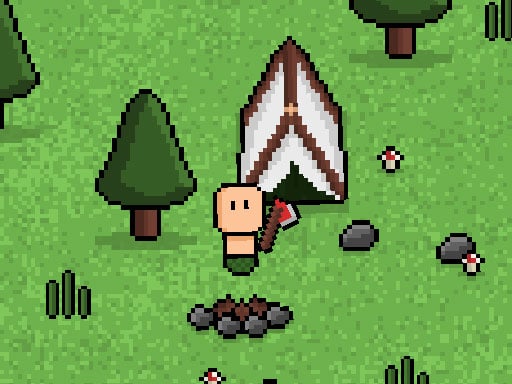
At its heart, Mini Blocks casts you as a minimalist, expressive blob navigating stark, retro-charged 2D levels. Inspired by the tactile immediacy of 8-bit classics—but sharpened with modern design intuition—the game challenges you to reach a goal flag in each stage using only two actions: jump and toggle. That “toggle” is the magic: press X (or tap left on mobile) to activate or deactivate environmental elements—floating blocks, bridges, moving platforms, even gravity wells. Timing matters. Precision matters. But so does intuition: learning which elements need to be on before you jump, which must vanish mid-air, and which should stay dormant until the final stretch.
The core loop is deceptively simple but endlessly expressive: assess the layout, experiment with toggling sequences, execute jumps with split-second timing, and adapt when your first attempt collapses into chaos. There’s no health bar or lives—just clean cause-and-effect, immediate feedback, and that addictive “aha!” when a seemingly impossible path clicks into place. And for those chasing mastery? Speedrun mode strips away hesitation, turning each level into a rhythmic, high-stakes dance of toggles and trajectories.
- Dual-Action Mastery: Jump and toggle—two inputs, infinite spatial possibilities
- Retro-Fueled Aesthetic: Authentic pixel art, chiptune-adjacent audio cues, and CRT-friendly contrast
- Cross-Platform Fluidity: Seamless play on desktop (arrow keys + space) and mobile (touch zones optimized for thumbs)
- Speedrun Mode: Leaderboard-ready challenges with frame-perfect timing demands
- Level-as-Puzzle: Every stage is a self-contained logic gate—you don’t just traverse it, you orchestrate it
You’ll love Mini Blocks if you crave games that respect your intelligence and your reflexes—if you miss the elegance of early arcade design but demand mechanical depth beyond nostalgia. It’s for players who find joy in pattern recognition, delight in tight controls, and get a quiet thrill from bending a world’s rules—just enough—to slip through the cracks.
Dive into Mini Blocks today—and discover how much power lies in one perfectly timed toggle.
How to Play
How to Play Mini Blocks: Your Complete First-Time Guide
Welcome! You’re about to step into a delightfully compact world of retro charm and clever platforming. Mini Blocks is designed to feel instantly familiar—like a beloved 8-bit classic—but with one fresh, intuitive twist: your ability to toggle elements on and off changes the level itself. There’s no steep learning curve here. By the end of this guide, you’ll understand not just how to move and act, but why each action matters—and you’ll be solving puzzles and clearing stages with confidence.
1. Your Mission: The Objective
Your goal is simple but satisfying: guide your small blob character from the starting point to the exit flag (or goal marker) in each stage. To get there, you’ll need to activate or deactivate blocks, platforms, bridges, or hazards—some only appear when turned on, others vanish when turned off. Every successful stage completed unlocks the next, and speedrun mode rewards clean, efficient solutions.
2. Taking Command: The Controls
Disclaimer: These are the standard controls for this type of game on mobile. The actual controls may be slightly different.
| Action / Purpose | Key(s) / Gesture |
|---|---|
| Jump | Desktop: C, ↑ (Up Arrow), or Left Click<br>Mobile: Touch Right Side of Screen |
| Turn On/Off Elements | Desktop: X, Spacebar, or Right Click<br>Mobile: Touch Left Side of Screen |
3. Reading the Battlefield: Your Screen (HUD)
- Goal Indicator: A small flag icon (often pulsing or glowing) appears near the top of the screen—it shows where the exit is located. This stays visible even when parts of the level are toggled away, helping you maintain spatial orientation.
- Element Status Icons: Tiny icons (e.g., a gear or lightbulb) appear near the bottom corners to show whether key interactive elements are currently on (lit) or off (dimmed). These help you track your own toggling actions without needing to scan the whole level.
- Stage Counter: Displayed as “Stage 1/12” or similar, this tells you exactly where you are in the sequence—critical for pacing and recognizing progression, especially since later stages layer multiple toggle-dependent paths.
4. The Rules of the World: Core Mechanics
- Toggle Logic: Every interactive block or platform has a fixed state—either active (solid, usable) or inactive (transparent, pass-through). Pressing the toggle button flips all elements of the same type simultaneously. For example, pressing
Xmight turn all blue platforms on while turning all red hazards off—so timing and observation matter more than reflex alone. - Physics Consistency: Gravity and jump height remain constant regardless of what’s toggled. If you jump while standing on an active platform and then toggle it off mid-air, you’ll fall through—not hang or clip. This predictability lets you plan multi-step sequences confidently.
- Safe Zones & Timing Windows: Some elements (like moving platforms or timed doors) only stay active for 3–5 seconds after being toggled. Watch their visual feedback (a subtle pulse or color shift) to learn their rhythm—this is how you build reliable, repeatable solutions rather than relying on luck.
Who Should Play
Players who enjoy tight, responsive arcade action—especially those drawn to retro pixel aesthetics and clever environmental interaction—will likely appreciate Mini Blocks. Its core mechanic of toggling level elements mid-platformer run appeals to puzzle-minded platformers who like planning jumps around dynamic obstacles. Speedrunners will value the clean inputs and stage-based progression for optimizing routes. Fans of minimalist 8-bit design and tactile feedback (like precise jump timing and immediate element responses) will find it satisfying. However, players who prefer narrative depth, open-ended exploration, or forgiving difficulty curves may find Mini Blocks’s focused, trial-and-error rhythm less engaging. It’s not about story or world-building—it’s about mastery through repetition, quick reflexes, and spatial awareness. Those seeking relaxed or atmospheric experiences might feel its pace too demanding or its mechanics too narrowly scoped.
Why Play Here
The Definitive Mini Blocks Experience: Why You Belong Here
We don’t ask you to adapt to the platform. We adapt everything—technology, design, ethics, and intent—to serve you. At our core is a simple, non-negotiable vow: we handle all the friction, so you can focus purely on the fun. Not the loading screens. Not the pop-ups. Not the fine print. Just the crisp joy of movement, the satisfying click of a toggle, the quiet triumph of solving a pixel-perfect puzzle—all exactly as the creators intended. That’s not convenience. That’s respect.
1. Reclaim Your Time: The Joy of Instant Play
Your attention is sacred—not a resource to be harvested between ads or stretched across installers and updates. When inspiration strikes at 2 a.m., or you’ve got three minutes between meetings, you shouldn’t need permission, patience, or persistence to play. You deserve immediacy as a birthright.
That’s why every game—including Mini Blocks—runs natively in your browser: no download, no installation, no account wall, no “just one more minute” delay.
This is our promise: when you want to play Mini Blocks, you're in the game in seconds—Desktop: C / Up Arrow or Left Click to Jump — X / Space or Right Click to Turn On/Off Elements; Mobile: Touch Right to Jump — Touch Left to Turn On/Off Elements. No friction, just pure, immediate fun.
2. Honest Fun: The Zero-Pressure Promise
Fun shouldn’t come with conditions. No paywalls gating progression. No energy systems draining momentum. No forced waits disguised as “strategy.” What you feel—the rush of a tight jump, the satisfaction of flipping a block mid-air—is real because the experience is uncompromised.
Our platform has no subscriptions, no premium unlocks for core mechanics, and no hidden monetization layers buried in Mini Blocks’s retro architecture.
Dive deep into every level and strategy of Mini Blocks with complete peace of mind. Our platform is free, and always will be. No strings, no surprises, just honest-to-goodness entertainment.
3. Play with Confidence: Our Commitment to a Fair & Secure Field
Great games thrive in environments where skill matters—and where your effort isn’t undermined by exploits, bots, or data leaks. Trust isn’t assumed here; it’s engineered. Every session is sandboxed, every leaderboard validated, every player treated as a peer—not a profile to be profiled.
We enforce strict anti-cheat integrity for speedrun mode and maintain end-to-end encryption for all session data—because your time, your progress, and your pride deserve protection.
Chase that top spot on the Mini Blocks leaderboard knowing it's a true test of skill. We build the secure, fair playground, so you can focus on building your legacy.
4. Respect for the Player: A Curated, Quality-First World
Clutter is disrespect. Quantity without curation is noise masquerading as choice. You’re not a metric—we’re not a marketplace. We select games like Mini Blocks not for virality or ad density, but for craftsmanship: its deliberate pacing, its tactile feedback loop, its reverence for 8-bit-era intentionality.
Every pixel, every input response, every pause between levels was designed with care—and we honor that care by refusing to dilute it with distractions. No banners. No auto-playing video. No sidebar spam. Just clean, focused, responsive gameplay.
You won't find thousands of cloned games here. We feature Mini Blocks because we believe it's an exceptional game worth your time. That's our curatorial promise: less noise, more of the quality you deserve.
Editor’s Opinion
We found Mini Blocks refreshingly tight—a pixel-perfect arcade puzzle-platformer where toggling blocks mid-jump creates genuine “aha” moments. Its retro aesthetic isn’t just skin-deep: the timing-based interactions, deliberate slowdown on landing, and crisp audio feedback all reinforce a tactile, 8-bit logic that holds up under repeated play. What stands out most is how cleanly the core mechanic integrates with level design—early stages teach without hand-holding, and later ones demand precise sequencing of jumps and switches. That said, the mobile touch controls occasionally misregister during rapid left-right input, especially when trying to toggle while airborne; a slight input buffer or visual confirmation would help. We also noticed the speedrun mode lacks split tracking or replay export—small omissions, but ones that matter to dedicated players. Still, Mini Blocks succeeds where many retro homages don’t: it feels authentically constrained, yet cleverly expressive within those limits.