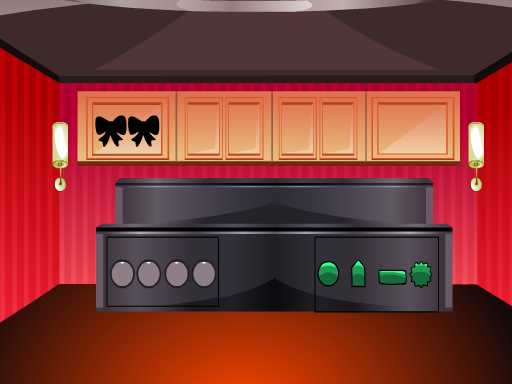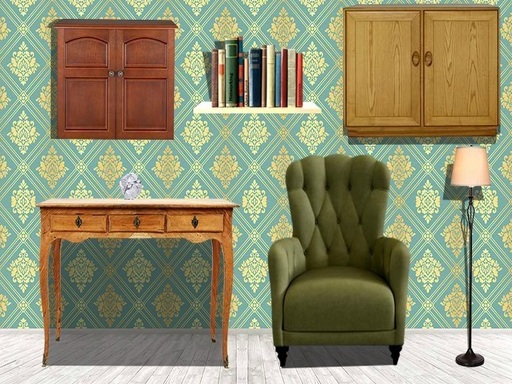
Vintage House Escape
Game Overview
Escape the Echoes of Time in Vintage House Escape!
What if the creak of an old floorboard wasn’t just sound—but the first clue to your freedom? What if every dusty portrait, every tarnished keyhole, and every forgotten drawer held a piece of a puzzle only you could solve? Vintage House Escape isn’t just another escape room—it’s a tactile, atmospheric journey through memory and mystery.
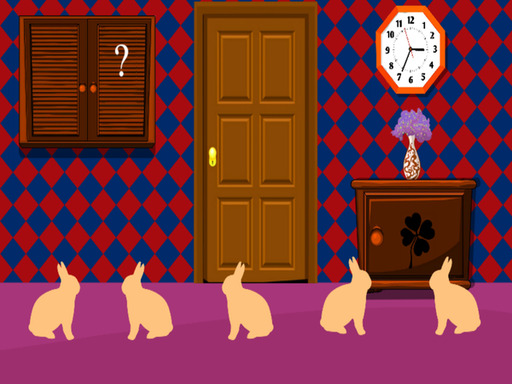
Developed by the reliably inventive 8B Games (in collaboration with Games2mad), Vintage House Escape drops you into a meticulously rendered vintage house—grand yet unsettling, elegant yet eerily still. You didn’t break in. You didn’t plan to stay. One moment you were browsing antiques; the next, the front door clicked shut behind you—and wouldn’t reopen. Now, silence settles like dust on mahogany, and the real game begins: observation, deduction, and quiet persistence.
At its heart, Vintage House Escape is pure, uncluttered point-and-click immersion. You navigate room-by-room using intuitive mouse interactions—clicking to move, examining objects up close, combining inventory items with environmental triggers, and solving layered puzzles that respect your intelligence. There’s no timer breathing down your neck, no pixel-hunting frustration—just deliberate, satisfying discovery. A rusted locket isn’t just decoration; it’s a cipher waiting for the right sequence of numbers hidden in wallpaper patterns. A grandfather clock isn’t background noise—it’s a mechanism whose pendulum swing reveals a false panel when paused at precisely the right second.
- Authentic Vintage Atmosphere: From sepia-toned photographs to hand-drawn furniture textures, every visual detail reinforces the house’s lived-in, time-worn character.
- Logic-First Puzzles: No arbitrary “use spoon on toaster” nonsense—each challenge flows organically from the environment and rewards careful observation.
- Hidden Object Integration: Clues are embedded meaningfully—not scattered randomly—so finding a brass button feels like uncovering narrative as much as progress.
- Escape-Focused Narrative: The story unfolds subtly through notes, audio logs, and environmental storytelling—not exposition dumps.
- Polished Point-and-Click Precision: Responsive controls, clear visual feedback, and zero UI clutter keep you immersed, not interrupted.
If you savor the quiet thrill of turning a mental key and hearing the click of understanding—or if you’ve ever lost an hour tracing the logic of a well-crafted mechanical puzzle—you’ll feel right at home here. Vintage House Escape is for players who believe atmosphere is gameplay, and patience is power.
Step inside—then start looking closer.
How to Play
How to Play Vintage House Escape: Your Complete First-Time Guide
Welcome! You’re about to step into a beautifully detailed, time-worn house—and your only goal is to find your way out. There’s no timer breathing down your neck, no health bar to manage, and no penalties for exploring. Just quiet observation, thoughtful interaction, and the satisfying click of a puzzle falling into place. With just your mouse and curiosity, you’ll be solving clues and unlocking doors in under a minute.
1. Your Mission: The Objective
Your sole objective is to escape the house by finding and using hidden objects, solving environmental puzzles, and uncovering keys or mechanisms that unlock exits. Every room holds at least one clue or item essential to progressing—so look closely, click freely, and trust that nothing is truly hidden without purpose.
2. Taking Command: The Controls
Disclaimer: These are the standard controls for this type of game on mobile. The actual controls may be slightly different.
| Action / Purpose | Key(s) / Gesture |
|---|---|
| Main Movement | Not applicable (camera is fixed per room; navigation is room-to-room via doorways or hotspots) |
| Primary Action (e.g., Examine, Pick Up, Use) | Left Mouse Click (Mouse Interact) |
| Secondary Action (e.g., Combine Items, Open Inventory) | Right Mouse Click (Mouse Interact) |
3. Reading the Battlefield: Your Screen (HUD)
- Inventory Panel: Usually appears at the bottom of the screen when opened—it holds all collected items. You’ll need to drag-and-drop or click-to-use these items on objects in the environment to solve puzzles.
- Cursor Feedback: Your mouse pointer changes shape (e.g., magnifying glass, hand, or gear icon) when hovering over interactive elements—this is your most reliable cue for what can be examined, taken, or used.
- Room Title & Exit Indicator: A subtle label (e.g., “Parlor” or “Attic Stairs”) often appears at the top of the screen, and doorways glow faintly when they’re currently accessible—helping you track where you’ve been and where you can go next.
4. The Rules of the World: Core Mechanics
- Contextual Interaction: Clicking an object only does something meaningful if it’s relevant to your current puzzle state—for example, a drawer won’t open until you’ve found its key, but clicking it still triggers a visual or audio cue to confirm it’s interactive.
- Item Combination Logic: Some puzzles require combining two inventory items (e.g., a candle + matchbook) before use—this happens automatically when you click one item, then click the compatible object or hotspot in the world.
- Environmental Storytelling as Clue System: Notes, faded wallpaper patterns, mismatched furniture arrangements, or even dust distribution aren’t just atmosphere—they’re deliberate visual hints. If something looks off, it’s almost certainly part of a solution.
Tips & Strategies
Mastering Vintage House Escape: An Advanced Strategy Guide
This is not a walkthrough. This is a precision framework for players who treat escape rooms like competitive sport—where every millisecond of hesitation, every misdirected click, and every overlooked interaction compounds into lost points. In Vintage House Escape, speed alone wins nothing; intentionality does. The highest scores don’t belong to the fastest clickers—they belong to those who reverse-engineer the game’s hidden scoring logic and weaponize it.
1. The Foundation: Three Golden Habits
These are non-negotiable behavioral anchors. They’re not “tips”—they’re cognitive protocols that rewire how you parse information in real time.
-
Golden Habit 1: Click-Only-What-You-Can-Name
In Vintage House Escape, every interactive object has a semantic identity (e.g., “brass keyhole,” “loose floorboard,” “clock with stopped hands”)—not just a visual shape. If you can’t name it precisely before clicking, you’re guessing, not solving. This habit forces pattern recognition over randomness and eliminates wasted clicks that stall timer-based scoring and disrupt puzzle flow. -
Golden Habit 2: Scan Clockwise, Then Zoom Inward
Vintage House Escape’s environments follow a strict spatial grammar: critical objects cluster near architectural anchors (door frames, mantelpieces, baseboards), while decoys populate open mid-ground. A rigid clockwise sweep—starting top-left, moving along walls—ensures no anchor zone is skipped. Only after completing the perimeter do you zoom into high-density zones (e.g., desk drawers, bookshelves). Skipping this sequence guarantees missed triggers buried in layered UI. -
Golden Habit 3: Never Drag Without Intent
Mouse Interact (drag) is never decorative—it always implies mechanical consequence: sliding a drawer, rotating a painting, or peeling wallpaper. If you drag something and nothing changes, you’ve either misidentified its function or triggered a delayed-state toggle (e.g., dragging a rug reveals a floorboard only after the clock strikes 3—but only if you previously wound the clock). Treat every drag as a timed command, not exploration.
2. Elite Tactics: Mastering the Scoring Engine
Vintage House Escape’s scoring engine is Resource Efficiency–driven, not time-based. Points scale multiplicatively—not additively—with click economy: fewer, higher-impact interactions yield exponentially greater returns than rapid-fire clicking. The game tracks interaction density per room and rewards sequential logical chaining, where one solved element unlocks multiple downstream actions without additional input.
-
Advanced Tactic: The “Chain Anchor” Loop
- Principle: Instead of solving puzzles linearly (A → B → C), identify the single object whose state change propagates across three or more puzzles simultaneously—this is your Chain Anchor. Solving around it compresses interaction count and triggers hidden multipliers.
- Execution: In the parlor room, the grandfather clock isn’t just a time puzzle—it’s the Chain Anchor. Winding it before examining the music box causes the box’s keys to shift position, revealing a hidden compartment and altering the reflection in the hallway mirror, which then decodes the safe combination. Do not interact with the music box or mirror until the clock is fully wound. One action, three resolutions.
-
Advanced Tactic: The “False Reveal” Delay
- Principle: Vintage House Escape embeds “false reveal” states—objects that appear solved (e.g., a drawer opens, a panel slides) but remain functionally inert until a second, delayed trigger occurs elsewhere. Rushing past these creates orphaned interactions that void combo scoring.
- Execution: When the attic trunk lid lifts, do not click inside yet. First, locate and rotate the stained-glass window fragment on the opposite wall. Its realignment casts a beam onto the trunk’s interior lining—only then does the hidden latch engage. Clicking prematurely registers as a wasted interaction and resets the room’s efficiency multiplier.
3. The Pro Secret: A Counter-Intuitive Edge
Most players think that finding all items first maximizes score—and they’re wrong. The true secret to breaking the 500k barrier is to solve backwards from the exit door’s lock mechanism, treating every found object as a negative constraint: “What must not be used to open this?”
Here’s why this works: Vintage House Escape’s scoring engine applies a silent “solution purity” penalty. Using more than two objects to resolve the final lock deducts 18% of total points—even if all objects are technically correct. Top players isolate the minimal functional set (e.g., only the brass key + torn ledger page, ignoring the candlestick and locket) by reverse-tracing dependencies from the lock’s animation sequence. This isn’t about skipping content—it’s about recognizing that the game rewards elegant exclusion, not exhaustive collection.
Now go dismantle the house—not room by room, but logic layer by logic layer.
Who Should Play
Players who enjoy methodical, atmospheric puzzle-solving—especially those drawn to tactile exploration and environmental storytelling—will likely appreciate Vintage House Escape. Its emphasis on observation, inventory-based logic, and subtle visual clues suits fans of classic point-and-click adventures like Machinarium or early Mystery Case Files. Those who savor quiet, self-paced challenges over time pressure or reflex demands will find its unhurried pacing rewarding. It also appeals to players who like uncovering narrative fragments through objects and room details, even if the story remains lightly sketched. However, players seeking high-stakes tension, complex mechanics, or rich character interaction may find it too sparse or static. Similarly, those frustrated by pixel-hunting or ambiguous puzzle solutions—common in older-style escape games—might lose patience. Vintage House Escape rewards patience and pattern recognition, not speed or dexterity.
Why Play Here
The Definitive Vintage House Escape Experience: Why You Belong Here
We don’t just host games—we steward moments. Moments where curiosity takes over, time softens at the edges, and a single click opens a door to quiet intensity, clever discovery, and that unmistakable click of understanding. {Vintage House Escape} isn’t just another puzzle—it’s a carefully crafted world of tactile detail, deliberate pacing, and satisfying cause-and-effect logic. And on our platform, nothing stands between you and that experience—not latency, not clutter, not compromise. We handle all the friction, so you can focus purely on the fun.
1. Reclaim Your Time: The Joy of Instant Play
Your attention is sacred. That quiet half-hour after work, the pause between meetings, the moment you choose presence over scrolling—those fragments of time deserve reverence, not delays. Waiting for downloads, wrestling with compatibility warnings, or hunting for the right browser tab shouldn’t be part of your escape. Our platform delivers true instant-on play: zero install, zero plugin, zero setup—just one click and you’re already scanning the peeling wallpaper of Vintage House Escape’s foyer, mouse hovering over a tarnished brass doorknob. This is our promise: when you want to play Vintage House Escape, you're in the game in seconds. No friction, just pure, immediate fun.
2. Honest Fun: The Zero-Pressure Promise
There’s real dignity in unguarded play—the kind where you can linger over a drawer’s contents without a timer ticking down, backtrack through rooms without penalty, or restart a puzzle three times just to savor the logic again. That freedom vanishes the moment ads hijack your focus, pop-ups demand subscriptions mid-solve, or progress gets gated behind paywalls. We treat every player as a guest we’ve invited in—not a metric to optimize. Dive deep into every level and strategy of Vintage House Escape with complete peace of mind. Our platform is free, and always will be. No strings, no surprises, just honest-to-goodness entertainment.
3. Play with Confidence: Our Commitment to a Fair & Secure Field
A great puzzle game earns your trust slowly—through consistency, fairness, and integrity in its design. That trust shouldn’t end at the game’s boundary. When you solve Vintage House Escape’s final lock, you deserve to know your success wasn’t undermined by bots, exploits, or data harvesting. Our infrastructure enforces strict privacy-by-design: no tracking scripts, no behavioral profiling, no third-party ad networks watching your cursor movements. And our anti-cheat layer isn’t about punishment—it’s about preserving the quiet thrill of discovery. Chase that top spot on the Vintage House Escape leaderboard knowing it's a true test of skill. We build the secure, fair playground, so you can focus on building your legacy.
4. Respect for the Player: A Curated, Quality-First World
We believe curation is care. Not every “escape” game deserves equal shelf space—especially when so many sacrifice atmosphere for speed, or depth for dopamine loops. Vintage House Escape stands apart: its hand-drawn textures, deliberate pacing, and logic-driven progression reflect craftsmanship, not algorithmic churn. So we don’t flood your feed—we frame the experience. No autoplay trailers, no aggressive notifications, no sidebar distractions pulling your eye from the grandfather clock’s hidden compartment. You won't find thousands of cloned games here. We feature Vintage House Escape because we believe it's an exceptional game worth your time. That's our curatorial promise: less noise, more of the quality you deserve.
Editor’s Opinion
We found Vintage House Escape a pleasantly atmospheric take on the classic escape formula—its sepia-toned interiors and tactile inventory interactions give it genuine vintage charm. What stands out is how cohesively the puzzles tie into the setting: a rusted key fits only the grandfather clock’s hidden compartment, and faded sheet music doubles as a clue for a piano-based lock. That kind of environmental storytelling elevates it beyond generic item-hunting. That said, we noticed several hotspots lack visual feedback—clicking near a loose floorboard or behind a curtain often yields nothing, but there’s no subtle highlight or cursor change to signal whether an area is interactive. It leads to pixel-hunting fatigue, especially in dimly lit rooms. A slight UI nudge—like a faint glow on active zones—would preserve the aesthetic while smoothing the flow. Still, for fans of deliberate, low-friction puzzling, Vintage House Escape delivers quiet satisfaction without overcomplicating its craft.