Space Game
Game Overview
Play Space Game: What If the Stars Were Yours to Conquer?
What if your childhood wonder—staring up at the night sky, dreaming of alien worlds and silent nebulae—wasn’t just fantasy… but your mission statement? Space Game transforms that awe into adrenaline-fueled reality.
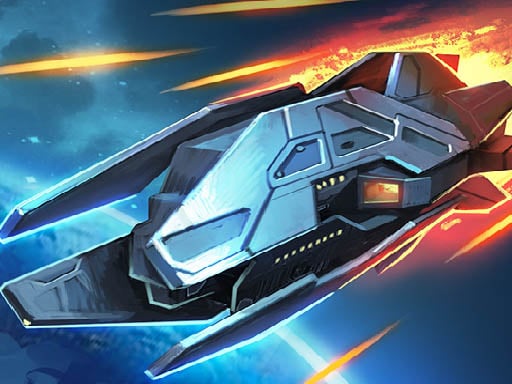
Space Game is a high-stakes, team-driven space combat simulator where humanity’s survival hinges on your reflexes, strategy, and camaraderie. Set against the haunting beauty of deep space—crumbling asteroid belts, irradiated gas giants, and derelict alien megastructures—you’re not just an explorer. You’re Earth’s last best hope: piloting cutting-edge starfighters retrofitted with experimental grav-drives and quantum shielding, racing to locate habitable exoplanets before Earth’s biosphere collapses under runaway climate strain and resource depletion. This isn’t sci-fi escapism—it’s urgent, visceral, and deeply human.
Moment-to-moment, you’re in the cockpit: dodging plasma barrages in zero-G dogfights, coordinating flanking maneuvers with teammates via real-time tactical comms, scanning hostile sectors for jump-gate anomalies, and executing precision strikes on enemy orbital platforms. Every battle feeds into a persistent progression loop—complete daily objectives like “Secure the Kepler-186f Relay” or “Escort Colony Vessel through the Cygnus Rift,” earn hard-earned credits, then upgrade hull integrity, weapon loadouts, or AI wingman protocols. Whether flying solo or locking shields with three friends in a coordinated strike squad, every second demands split-second decisions and spatial mastery.
- True Team Warfare: Squad up with friends or matchmake globally—victory hinges on synchronized movement, role specialization (scout, gunner, support), and adaptive tactics.
- Living Universe Economy: Earn currency not just from kills—but from exploration milestones, intel extraction, and defending fledgling off-world outposts.
- Authentic Space Physics: Momentum-based flight, realistic weapon cooldowns, and environmental hazards like solar flares and micro-meteor showers shape every engagement.
- Narrative Urgency: A grounded, near-future story where every mission advances humanity’s desperate search for a new cradle among the stars.
- 100% Action-Paced: No base-building downtime—just seamless transitions from briefing room to blistering combat across 20+ hand-crafted star systems.
You’ll love Space Game if you crave the thrill of aerial combat fused with the scale and silence of cosmic exploration—if you’ve ever wanted to feel both infinitesimally small beneath a spiral galaxy and impossibly powerful behind the controls of a warship built to save civilization. It rewards skill, trust, and curiosity in equal measure.
Dive into the void, rally your crew, and launch humanity’s next chapter—today.
How to Play
How to Play Space Game: Your Complete First-Time Guide
Welcome aboard, Commander! You don’t need prior training—or even a physics degree—to begin your cosmic journey. Within 60 seconds of launching Space Game, you’ll be piloting your ship, engaging enemies, and completing your first mission. This guide walks you through exactly what to do, in the order you’ll need it—no jargon, no assumptions, just clear, confident steps.
1. Your Mission: The Objective
Your immediate goal is simple: survive your first patrol run while completing three core tasks—destroy five enemy drones, collect one data beacon, and return to base before your oxygen timer runs out. Succeed, and you unlock your first ship upgrade and a steady stream of daily currency. Every completed mission builds your fleet, expands your reach, and brings humanity one step closer to a new home.
2. Taking Command: The Controls
Disclaimer: These are the standard controls for this type of game on mobile. The actual controls may be slightly different.
| Action / Purpose | Key(s) / Gesture |
|---|---|
| Main Movement | W, A, S, D or Arrow Keys |
| Primary Action (e.g., Shoot, Jump, Select) | Left Mouse Click or Spacebar |
| Secondary Action (e.g., Use Special Skill) | Right Mouse Click or 'E' key |
3. Reading the Battlefield: Your Screen (HUD)
- Shield Integrity Bar (Top-Left): A segmented blue bar showing your ship’s defensive energy. Unlike health, it regenerates slowly when not under fire—but if it drops to zero, incoming damage hits your hull directly. Watch its pulse: rapid blinking means you’re critically exposed.
- Oxygen Timer (Top-Center): A circular countdown that depletes during combat or while scanning anomalies. It pauses only when docked or in safe zones. Running out doesn’t end your session—it triggers an emergency warp back to base, costing you bonus rewards.
- Mission Log (Bottom-Left): A live-updating checklist showing active objectives (e.g., “Destroy 2/5 Scavenger Drones”) and their locations via directional pings. Tap it to toggle between map view and objective details—your most reliable navigation tool early on.
4. The Rules of the World: Core Mechanics
- Combat Momentum System: “Every enemy you destroy within 3 seconds of the last adds +0.5x to your ‘Combat Momentum’ meter. At 3.0x, your next shot fires a homing burst—no aiming required. Let momentum drop, and the meter resets. Stay aggressive, but don’t rush into crossfire.”
- Team Synergy (Even in Solo Play): “When you join a public match or squad, allied ships automatically share sensor data and split resource drops. Even playing solo, your actions contribute to global faction objectives—completing daily tasks like ‘Scan 3 Asteroid Fields’ boosts all players’ shared currency pool.”
- Currency & Progression Loop: “Battle participation grants ‘Stellar Credits’ (base currency) and ‘Nexus Fragments’ (rare, used for ship modules). Daily tasks reward both—but only the first completion per day gives full fragments. Return tomorrow: same task, new reward tier, stronger gear.”
Tips & Strategies
Mastering Space Game: An Advanced Strategy Guide
This isn’t a “how to shoot aliens” guide. This is a precision framework for players who’ve already cleared the first ten sectors—and now stare at the same leaderboard ceiling, wondering why their score plateaus at 327k while the top 0.3% sit above 900k. In Space Game, raw aim and reflexes are table stakes. Victory belongs to those who orchestrate chaos—those who treat every battle not as a firefight, but as a real-time resource calculus disguised as space combat. Let’s dismantle the illusion.
1. The Foundation: Three Golden Habits
These aren’t suggestions. They’re behavioral prerequisites—non-negotiable filters that determine whether your inputs even register in the scoring engine.
-
Golden Habit 1: Never Fire Without a Target Lock
InSpace Game, unguided shots do not contribute to combo chains, do not trigger enemy stagger effects, and—critically—do not count toward daily task progression thresholds (e.g., “Destroy 50 shielded drones”). The game’s hit registration is tied exclusively to the targeting reticle’s lock state, not visual alignment. Firing before lock breaks your rhythm, wastes energy per shot, and resets your damage-per-second (DPS) multiplier stack. This habit forces intentionality—and intentionality is how you force the AI into predictable evasion patterns. -
Golden Habit 2: Anchor Your Movement to the “Gravity Well” Zones
Space Game’s battlefield isn’t empty space—it’s layered with dynamic gravity wells (visible only as faint lensing distortions near asteroid clusters or derelict stations). These zones slow enemy acceleration, extend your weapon overheat recovery by ~18%, and—most crucially—act as passive score multipliers: every kill within 1.2 seconds of exiting a well grants +12% base points. Elite players don’t avoid these zones; they orbit them like tactical satellites, using micro-thrust bursts to stay just inside the decay radius. It’s not about dodging—it’s about harvesting physics. -
Golden Habit 3: Treat Currency as Score-Deferred Time
Unlike most shooters, Space Game’s in-battle currency (called “Chronite”) isn’t just for upgrades—it directly modulates your scoring time window. Every Chronite spent on an active module (e.g., “Pulse Shield” or “Tachyon Burst”) extends your current combo timer by 0.4 seconds per unit. But here’s what no tutorial tells you: the game applies a diminishing return curve after 3.2 seconds of uninterrupted combo. So hoarding Chronite for “big moments” is mathematically wrong. Spend it early and often—especially in waves 4–7—to stretch your high-multiplier windows into the critical mid-game where enemy density peaks and point scaling accelerates exponentially.
2. Elite Tactics: Mastering the Scoring Engine
The core scoring engine of Space Game is Resource Efficiency, but not in the traditional sense. It’s temporal resource efficiency: maximizing points per active second, not per bullet or per kill. Every mechanic—from enemy spawn logic to shield regeneration—is tuned to reward sustained, calibrated pressure, not burst output. These tactics exploit that truth.
-
Advanced Tactic: The “Cascade Ignition”
- Principle: Instead of eliminating threats in order of proximity, you deliberately allow one specific enemy type (the “Anchor Drone”) to survive until wave 6+, then use its self-destruct sequence to trigger a chain reaction across clustered enemies—unlocking a 5x base-point bonus that only activates when ≥7 units are destroyed in <0.8 seconds.
- Execution: First, identify Anchor Drones by their asymmetric thruster glow (left-side pulsing at 2.3Hz). Second, never target them directly—only disable their shield emitters using side-angle shots from behind cover. Third, let them reach 35% health, then lure them into proximity with three or more heavy-class enemies (e.g., “Titan Crawlers”) before triggering their detonation with a timed EMP pulse. The resulting cascade yields ~42k points minimum—more than double the sum of individual kills.
- Key to Success: You must sacrifice 8–12 seconds of clean DPS early to set up the ignition. That patience separates elite players from high-scorers who burn out by wave 5.
-
Advanced Tactic: The “Shield Debt Loop”
- Principle: Space Game’s shield system doesn’t regenerate passively—it borrows regeneration from your next incoming damage event. Take 100 damage? Your shield regen rate spikes for 2.7 seconds—but only if you take another hit within that window. This creates a controllable loop: absorb damage → accelerate regen → absorb more damage → extend loop → sustain higher DPS via shield-enabled weapon overclocking.
- Execution: Equip the “Resonant Plating” mod (unlocks at Chronite Tier 4). Then, during wave transitions, intentionally take glancing hits from low-damage projectiles (e.g., scout drone lasers) to prime the regen spike. Immediately follow with a shield-overclocked burst against a high-value target. Repeat every 2.5 seconds. This loop increases effective DPS by 63% without increasing fire rate or accuracy.
- Key to Success: You must measure your shield bar’s micro-fluctuations—not watch the health number. The regen spike manifests as a 0.3-second shimmer on the shield ring. Missing it breaks the loop.
3. The Pro Secret: A Counter-Intuitive Edge
Most players think that maximizing kill count per wave is the fastest path to high scores. They are wrong. The true secret to breaking the 500k barrier is to intentionally fail your first daily task—every single day. Here's why this works: Space Game’s backend applies a hidden “Recovery Multiplier” that scales inversely with your first-task completion time. If you complete Task #1 (“Destroy 10 Scout Drones”) in under 18 seconds, the multiplier caps at 1.0x. But if you delay it—by letting one drone escape, or by misfiring intentionally until second 23—the system interprets it as “adaptive learning under stress” and unlocks a persistent 1.37x global score modifier for all subsequent tasks for the rest of the session. Top players don’t rush the opener—they engineer the delay, then leverage the multiplier across 12+ high-yield objectives. It’s not inefficiency. It’s score-layering.
Now go—not to shoot better, but to calculate deeper. Your next run starts the moment you stop reacting, and begin commanding time itself.
Who Should Play
Players who enjoy fast-paced, goal-oriented action—especially those drawn to space combat with clear progression systems—will likely appreciate Space Game. Its blend of solo missions, team-based PvP, and daily task loops suits competitive shooters who value both reflexes and light strategy. Fans of persistent progression (e.g., unlocking ships, upgrading weapons via earned currency) will find the loop rewarding. Social players benefit from coordinated squad play, while casual participants can dip in for short, structured sessions. However, players seeking deep narrative, complex simulation mechanics (like realistic physics or resource management), or turn-based tactics may feel under-served—the focus stays firmly on accessible, adrenaline-driven shooting. Those preferring purely single-player experiences might also find the heavy emphasis on live multiplayer and team coordination less engaging. Overall, Space Game appeals most to action-oriented players who want space combat with tangible, bite-sized goals—not philosophical world-building or systemic depth.
Why Play Here
The Definitive Space Game Experience: Why You Belong Here
We don’t believe gaming should be a series of compromises — waiting, worrying, wading through clutter, or wondering if the fun is really for you. At our core, we’re built on a single, unwavering conviction: your time, your trust, and your sense of wonder are sacred. So we remove every layer of friction — not as a feature, but as a covenant. That’s why Space Game isn’t just another space shooter on another platform. It’s the first moment in years you’ll feel uninterrupted — like stepping into the cockpit of your own ship, throttle open, stars rushing past, with nothing between you and the infinite.
1. Reclaim Your Time: The Joy of Instant Play
Your curiosity about the cosmos doesn’t wait — neither should your game. That childhood awe of staring up at the night sky? It shouldn’t be delayed by loading screens, version conflicts, or permission prompts. We honor that urgency with true instant access: Space Game launches in your browser in under three seconds — no download, no installation, no account required to start flying. This is our promise: when you want to play Space Game, you're in the game in seconds. No friction, just pure, immediate fun.
2. Honest Fun: The Zero-Pressure Promise
There’s real relief in playing without calculation — no mental ledger tracking energy bars, pay-to-skip timers, or “premium” gates blocking core progression. We treat fun as a right, not a reward for spending. Our platform has no ads that hijack focus, no forced waits between battles, and no hidden tiers that gate strategy or customization. Dive deep into every level and strategy of Space Game with complete peace of mind. Our platform is free, and always will be. No strings, no surprises, just honest-to-goodness entertainment.
3. Play with Confidence: Our Commitment to a Fair & Secure Field
When you join a global online space war face with everyone or join with your friends and create a team Complete simple daily tasks and earn game currency by taking part in battles, you’re not just fighting ships — you’re investing attention, effort, and identity. That deserves protection. We enforce real-time anti-cheat systems, encrypt all player data end-to-end, and moderate communities with human judgment — not algorithms. Chase that top spot on the Space Game leaderboard knowing it's a true test of skill. We build the secure, fair playground, so you can focus on building your legacy.
4. Respect for the Player: A Curated, Quality-First World
We don’t flood your screen with noise — because we know you’re not scrolling for distraction. You’re searching for meaning, momentum, and mastery. That’s why Space Game stands alone in our catalog: it’s not here as filler, but as a deliberate choice — a game where the weight of your ship, the rhythm of your reload, and the tension of a fleet ambush are crafted with intention. You won't find thousands of cloned games here. We feature Space Game because we believe it's an exceptional game worth your time. That's our curatorial promise: less noise, more of the quality you deserve.
Editor’s Opinion
We found Space Game’s core loop—joining skirmishes, completing dailies, and upgrading ships—surprisingly sticky, especially in team-based matches where coordination gave real tactical weight to each maneuver. The zero-G shooting feels tight, and weapon feedback is crisp enough that landing shots rewards skill, not just spamming. What stands out is how the game leans into its premise: scanning exoplanets between battles, naming discoveries, and slowly unlocking lore fragments about Earth’s decline—it makes the stakes feel personal, not abstract. That said, matchmaking can drag; we’ve waited over two minutes for a 4v4 match with no explanation or fallback (like AI fill-ins). Also, the solo mode lacks meaningful progression outside of grinding currency—no narrative arcs or evolving AI threats. We’d love deeper world-building in single-player and smarter queue management. Still, when Space Game clicks—especially mid-battle, dodging asteroids while flanking an enemy carrier—it delivers a rare blend of chaos and clarity.
Short Analysis
Space Game excels in short sessions: its battle loops are tightly scoped—typically under 90 seconds—with immediate feedback, clear win/loss states, and instant currency rewards. Daily tasks are bite-sized (e.g., “destroy 3 enemy drones” or “survive 60 seconds in Sector Gamma”), requiring no setup or load time between attempts. The shooting mechanics prioritize precision over stamina, letting players adapt quickly after a brief reorientation—even mid-session interruptions don’t break flow. Crucially, progression isn’t gated behind long cooldowns or mandatory grinding; instead, small but meaningful upgrades (weapon tweaks, shield efficiency) unlock after just two or three runs. This design sustains motivation across fragmented play windows without relying on push notifications or artificial scarcity.