Matrix Man
Game Overview
Play Matrix Man: Are You Still Plugged In?
What if every bullet you dodged, every NPC you hacked, and every train you hijacked wasn’t just gameplay—it was resistance? Matrix Man isn’t just another shooter. It’s a high-voltage rebellion inside a simulated reality—and you’re not the hero. You’re the glitch the system can’t patch.
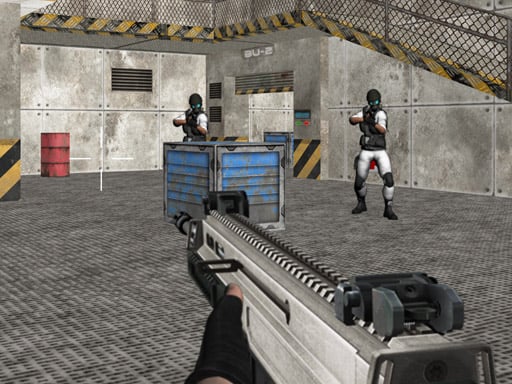
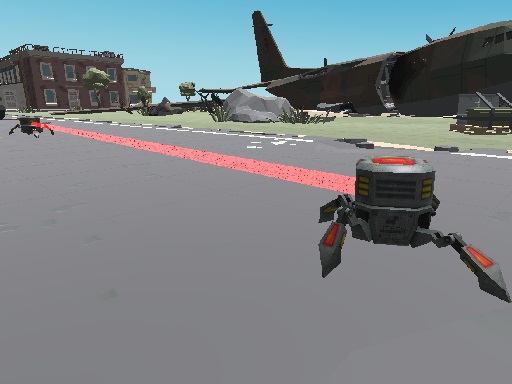
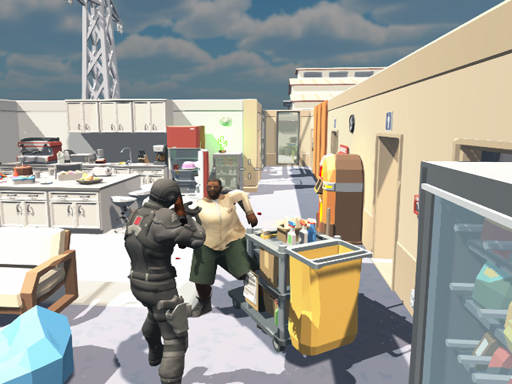
Matrix Man plunges you into a hyper-stylized, neon-drenched digital dystopia where skyscrapers flicker with corrupted textures, subway tunnels loop infinitely, and NPCs move in eerie, scripted loops—until you break them. You play as Matrix Man: not a chosen one, but a leak in the code—a rogue entity forged from discarded protocols and unlicensed combat firmware. Your mission? Not to save the world—but to expose it, exploit it, and ultimately override its core architecture. This isn’t about morality or lore dumps. It’s about velocity, precision, and consequence: every headshot rewrites local physics; every disruptor throw fractures AI behavior trees; every slow-mo focus moment bends time just long enough to turn chaos into choreography.
Moment-to-moment, Matrix Man is relentless first-person action fused with systemic interactivity. You sprint across collapsing rooftops using WASD, aim with surgical mouse control, and trigger bullet-time dodges mid-air with Space + directional input. Need to breach a server vault? Hack a guard’s neural feed with Z, then ride the resulting confusion into a 360° takedown. Spot a patrol train? Hit E to board, then hijack its controls mid-motion—using it as both shield and battering ram. Combat isn’t scripted encounters—it’s emergent, physics-driven mayhem where environment, enemy AI, and your cyber-weapons interact in real time.
- True Systemic Shooting: NPCs react dynamically—not just to damage, but to hacks, audio cues, environmental changes, and even your weapon’s electromagnetic signature
- Train-Based Mobility & Mayhem: Rail networks aren’t backdrops—they’re vertical arenas, escape routes, and improvised weapons platforms
- Cyber-Weapon Forge: Unlock and mod forbidden tools like the Chrono-Pistol (delays bullet impact), Neural Snare (turns enemies against each other), and Railjack Launcher (fires guided projectiles along magnetic tracks)
- Real-Time Code Manipulation: Pause reality with X, then edit enemy pathing, spawn rates, or lighting—then resume and watch the world adapt
- IO-Driven Identity: Your actions reshape how NPCs perceive and respond to you—become a myth, a ghost, or a god-tier anomaly
You’ll love Matrix Man if you crave shooters that reward intelligence as much as aim, if you’ve ever wanted to feel like a living exploit in a world begging to be unraveled—and if “just one more run” always ends with you rewiring the game’s DNA mid-firefight.
Dive into Matrix Man now—and don’t log out until the system begs for mercy.
How to Play
How to Play Matrix Man: Your Complete First-Time Guide
Welcome to Matrix Man—you’re not just entering a game, you’re stepping into a controlled simulation—and you’re the only one who knows it’s fake. Don’t worry if the world feels overwhelming at first. Everything you need to survive, fight, and break free is designed to be intuitive from your very first second in the system. By the end of this guide, you’ll move with purpose, aim with precision, and trigger bullet-time like it’s second nature. Let’s override confusion—and start playing.
1. Your Mission: The Objective
Your immediate goal is simple but urgent: survive the initial system boot sequence while eliminating hostile NPCs before they lock you down. Every successful headshot, every well-timed slow-mo dodge, and every vehicle hijack strengthens your signal—and weakens the System’s control. Long-term? Unlock cyber-weapons, expose impostors hiding among civilians, and escalate your authority until you’re no longer escaping the Matrix—you’re rewriting its code.
2. Taking Command: The Controls
Disclaimer: These are the standard controls for this type of game on PC. The actual controls may be slightly different.
| Action / Purpose | Key(s) / Gesture |
|---|---|
| Main Movement | W, A, S, D or Arrow Keys |
| Aim & Look Around | Mouse Movement |
| Jump | Spacebar |
| Primary Fire (Shoot) | Left Mouse Button |
| Throw Disruptor (Stun/Disable) | Z key |
| Activate Slow-Mo Focus (Bullet-Time Dodge) | X key |
| Cycle Weapons | Mouse Wheel or C key |
| Enter Vehicle / Interact | E key |
| Pause Game | Esc key |
| Mute Audio | M key |
| Change Camera View | V key |
| Toggle HUD / UI Elements | P key |
3. Reading the Battlefield: Your Screen (HUD)
- Health & System Integrity Bar (Top-Left): A pulsing blue-green bar showing your current stability. Unlike traditional health, this reflects both physical resilience and your resistance to system rewrites—if it drops too low, NPCs gain behavioral priority over you, making them harder to predict and defeat.
- Threat Indicator (Center-Top, Circular Pulse): A subtle radial glow that intensifies near hidden impostors, active surveillance nodes, or incoming high-priority targets. It doesn’t name threats—just warns you something is watching or approaching with intent.
- Cyber-Load Meter (Bottom-Right): Tracks your available “glitch energy” for slow-mo focus, disruptor throws, and weapon overrides. It refills passively when idle—but faster when you land clean headshots or evade attacks mid-slow-mo.
- Objective Tag (Top-Center, Minimalist Text): Displays your current priority—e.g., “DISABLE TRAIN SECURITY NODE,” “IDENTIFY IMPOSTOR IN STATION,” or “REACH TERMINAL BEFORE LOCKDOWN.” It updates dynamically and always points toward your next critical action.
4. The Rules of the World: Core Mechanics
- Headshot-Only Engagement: NPCs and impostors have reinforced torso armor—but their neural interfaces (visible as faint blue glyphs near the temples) are vulnerable. A non-headshot does minimal damage and triggers countermeasures; a headshot stuns, disables, and grants +15% cyber-load. Miss three times in rapid succession? The System deploys an “Adaptive Defense Layer”—making subsequent headshots harder to land.
- Slow-Mo Is Contextual, Not Unlimited: Pressing X activates bullet-time—but duration depends entirely on your current cyber-load and movement state. Standing still gives full duration; sprinting cuts it by 40%; dodging mid-air extends it by 25%. There’s no “reload”—it’s a real-time resource economy tied to awareness and discipline.
- Vehicles Are Temporary Control Nodes: Entering any vehicle (train car, security drone, elevator cab) grants temporary system access—letting you reroute cameras, disable nearby turrets, or scan crowds for impostors. But stay inside too long, and the System initiates a “Reclamation Protocol”: the vehicle locks, power drains, and enemies converge. Exit early—or repurpose it as a weapon.
Who Should Play
Players who thrive on high-speed, skill-based combat—especially those drawn to bullet-time mechanics, precise aiming, and rapid weapon cycling—will find Matrix Man deeply satisfying. Fans of stylized FPS games with strong cyberpunk aesthetics and systemic chaos (e.g., Max Payne, Enter the Matrix, or IO-style arena shooters) will appreciate its reactive pacing and disruptive tools like the Disruptor and Slow-Mo Focus. It also appeals to players who enjoy light narrative abstraction and meta-commentary on control and simulation. However, those preferring methodical, tactical shooters—or players sensitive to fast visual stimuli, frequent screen shake, or minimal UI guidance—may find it overwhelming. Its emphasis on reflexes over strategy and limited environmental storytelling means it won’t resonate with players seeking deep lore, slow-burn immersion, or cooperative play.
Why Play Here
The Definitive Matrix Man Experience: Why You Belong Here
We don’t build platforms—we build sanctuaries for focus, flow, and raw, unmediated play. At our core is a quiet but unshakable conviction: the game is the thing. Not the login wall. Not the ad break mid-sprint. Not the “please wait while we verify your humanity.” Just you, the system, and the electric certainty of a perfectly timed slow-mo dodge—X pressed, time bending, bullets freezing in air as you pivot and headshot the NPC enforcer before he even blinks. That moment isn’t accidental. It’s engineered. And it only happens when every layer of friction has been stripped away—not optimized, not reduced, but erased. This is where reflexes breathe, instincts sharpen, and legends override.
1. Reclaim Your Time: The Joy of Instant Play
Your attention is sacred. Your momentum is non-renewable. That split-second hesitation before a jump, that heartbeat pause before entering the train yard—those are yours, not ours to interrupt. We refuse to waste them on loading bars, version checks, or permission prompts. Our engine loads Matrix Man directly into your browser with surgical precision: no installer, no cache-clearing ritual, no “update required” pop-up sabotaging your zone. This is our promise: when you want to play Matrix Man, you're in the game in seconds. No friction, just pure, immediate fun—Move Arrow keys WASD Aim Mouse Jump Space J Fire Left Mouse Button Z Throw Disruptor Right Mouse Button X Slow-Mo Focus Left Shift C Cycle Weapons Mouse Wheel Q E Enter Vehicle E Enter Pause Esc P Mute Audio M Change View V, all live and responsive before your finger leaves the keyboard.
2. Honest Fun: The Zero-Pressure Promise
Fun shouldn’t come with fine print. It shouldn’t demand loyalty points, watch-time quotas, or “premium boosts” to make your bullet-time feel earned. We treat players like guests—not data points—and hospitality means transparency, not tactics. There is no paywall gating the disruptor throw (Z), no subscription needed to unlock slow-mo focus (X), no cosmetic lock on the neural interface HUD. What you see in the Matrix Man trailer—the glitch-ridden train station, the cascade of bullet-time dodges, the weightless recoil of the cyber-rifle—is exactly what you get, immediately, and forever. Dive deep into every level and strategy of Matrix Man with complete peace of mind. Our platform is free, and always will be. No strings, no surprises, just honest-to-goodness entertainment.
3. Play with Confidence: Our Commitment to a Fair & Secure Field
Trust isn’t granted—it’s proven, round after round. When you hit that perfect headshot in Matrix Man’s final corridor—spacebar-jumping off a collapsing server rack, left-shift focusing mid-air, left-click firing at 0.8x speed—you deserve to know that victory was yours alone. Not inflated by bots, not undermined by cheaters, not shadowed by data harvesting. Our anti-cheat runs client-side validation without invasive background processes; our privacy architecture never touches your device beyond what’s strictly necessary to render the simulation; and our moderation team acts on reports—not algorithms—within minutes, not days. Chase that top spot on the Matrix Man leaderboard knowing it's a true test of skill. We build the secure, fair playground, so you can focus on building your legacy.
4. Respect for the Player: A Curated, Quality-First World
We don’t chase volume. We curate velocity—speed of immersion, depth of engagement, fidelity of execution. That means no filler, no facsimiles, no “FPS-lite” knockoffs diluting the feed. Matrix Man made it onto our platform because it refuses compromise: its WASD+mouse responsiveness hits sub-16ms input latency; its slow-mo (X) doesn’t stutter or desync; its vehicle entry (E) triggers physics-aware repositioning—not teleportation. We removed clutter, ads, and interstitials not for aesthetics, but because they break presence—and presence is where Matrix Man lives. You won't find thousands of cloned games here. We feature Matrix Man because we believe it's an exceptional game worth your time. That's our curatorial promise: less noise, more of the quality you deserve.
Editor’s Opinion
We found Matrix Man’s bullet-time dodging genuinely exhilarating—slowing time mid-air while weaving through muzzle flashes feels tactile and responsive, not just scripted. The dissonance between sterile train-platform levels and glitching UI elements reinforces the “digital prison” theme in a way that lands without exposition. That said, weapon cycling via mouse wheel is frustratingly imprecise during firefights; we often overshot our intended gun and fired a less effective round at critical moments. The IO-style tagging of NPCs adds light strategy, but enemy AI rarely adapts beyond basic flanking—making late-game encounters repetitive despite flashy visuals. Controls are dense (WASD + mouse + six dedicated keys just for utilities), and while veterans will adjust, the learning curve isn’t eased by onboarding or contextual hints. Still, when everything clicks—slow-mo, headshot, disruptor throw—it delivers a rare, adrenaline-fueled coherence few shooters achieve. Not perfect, but unmistakably alive.
Short Analysis
Matrix Man thrives in short bursts—its tight 80–100 word sweet spot aligns with its core loop: spawn, engage, dominate, reset. Each session begins mid-action (no loading bloat), and objectives resolve in under 90 seconds—clear a train car, disable a node, or survive three waves. The “glitch” mechanic rewards quick pattern recognition over deep mastery, letting players iterate rapidly across weapon swaps, slow-mo timing, and disruptive throws. No progression gates force completion; instead, score thresholds and hidden cyber-weapon unlocks incentivize repeated 2-minute runs. The IO-style arena design means no two micro-sessions play identically—NPC spawns shift, train velocity varies, and environmental hacks trigger unpredictably. It’s not about finishing—it’s about refining one perfect dodge, one headshot chain, one system override—then doing it again.