Spiders Attack
Game Overview
Play Spiders Attack: Where Spider Robots Rule the Skies—and the Streets!
What happens when razor-sharp agility, tactical verticality, and laser-scorched chaos collide in a single, pulse-pounding package? You get Spiders Attack—a high-octane 3D shooter where you’re not just another soldier, but a hyper-mobile, wall-running, building-leaping spider robot built for domination.
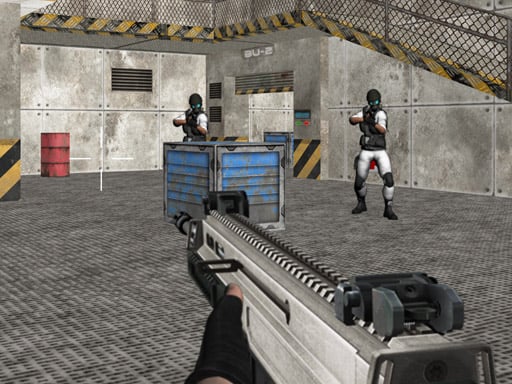
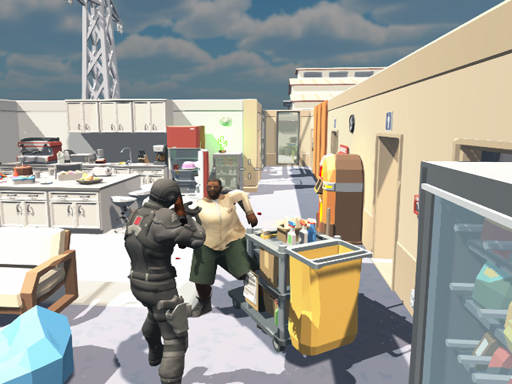
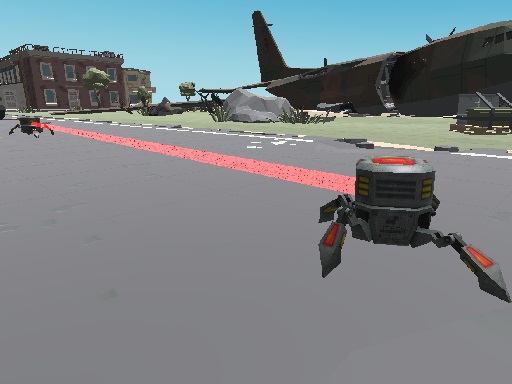
Spiders Attack redefines arena combat by fusing kinetic movement with intelligent enemy AI. Forget static firefights—you’re dropped into dynamic, multi-layered maps ranging from rain-slicked cityscapes and skeletal construction sites to fortified warfare facilities and tense, close-quarters heist buildings. Your mission? Secure zones, eliminate hostile AI spiders armed with precision laser weaponry, and adapt your approach on the fly. Success hinges less on raw firepower and more on spatial awareness, timing, and creative positioning—whether that means launching off a crumbling rooftop to flank an enemy, sidling up a sheer façade to gain height advantage, or baiting foes into narrow alleys before dropping in from above.
In Spiders Attack, every second is movement-driven action. You navigate with intuitive WASD controls, vault over obstacles, execute mid-air jumps with spacebar, and unleash precise, responsive shots with the left mouse button. The core loop is tight and rewarding: scout, position, strike, reposition—and repeat, all while reading enemy behavior and exploiting environmental geometry. There’s no cover system to hide behind—only momentum, angles, and instinct.
- Vertical Combat Redefined: Wall-run, ledge-hop, and chain-jump across fully 3D urban and industrial environments
- Smart, Reactive AI Spiders: Enemies flank, take cover, coordinate fire, and adapt to your movement patterns
- Five Distinct, Thematic Arenas: From open battle royale maps to claustrophobic heist interiors—each demands unique tactics
- Robot Identity & Fluid Physics: Feel the weight and responsiveness of your spider chassis—fast, precise, and deeply controllable
- WebGL-Powered Unity3D Performance: Runs smoothly in-browser with zero installs, yet delivers console-grade visual polish and physics fidelity
If you live for games that reward quick thinking over quick reloading—if you crave the rush of outmaneuvering opponents through sheer spatial mastery and mechanical fluency—Spiders Attack is your new obsession. It’s not just about shooting; it’s about orchestrating movement like a living weapon.
Dive into Spiders Attack now—and prove that the highest ground isn’t just advantageous… it’s yours.
How to Play
How to Play Spiders Attack: Your Complete First-Time Guide
Welcome to Spiders Attack—you’re about to step into a fast-paced 3D battlefield where agility, aim, and smart movement decide every encounter. Don’t worry if you’ve never fought robotic spiders before: the core controls are intuitive, the feedback is immediate, and your first confident wall-run or mid-air shot will feel earned—not accidental. Let’s get you moving, aiming, and dominating in under two minutes.
1. Your Mission: The Objective
Survive as long as possible while eliminating AI-controlled spider enemies across dynamic maps—each victory advances your rank and unlocks new tactical options. Your immediate goal isn’t perfection; it’s awareness: learn one map, master one approach (like flanking from height), and turn reaction into intention.
2. Taking Command: The Controls
Disclaimer: These are the standard controls for this type of game on desktop/web browsers. The actual controls may be slightly different.
| Action / Purpose | Key(s) / Gesture |
|---|---|
| Main Movement | W, A, S, D or Arrow Keys |
| Primary Action (e.g., Shoot, Jump, Select) | Left Mouse Click (shoot) or Spacebar (jump) |
| Secondary Action (e.g., Use Special Skill) | Right Mouse Click (wall run / dash) or 'E' key (tactical reload / ability toggle) |
3. Reading the Battlefield: Your Screen (HUD)
- Health & Armor Bar: Positioned at the bottom center, this dual-layer bar shows your robot’s structural integrity (top) and energy shielding (bottom). When either depletes fully, you’re disabled—prioritize cover before both drop below 30%.
- Ammo Counter & Reload Indicator: Located just above your crosshair, this displays current laser cells and pulses amber when reloading. Firing too rapidly triggers a 1.2-second cooldown—timing matters more than volume.
- Map Compass & Threat Marker: A subtle radial compass in the top-right highlights enemy positions (red pings) only after they detect you or fire. It doesn’t show stealthed spiders—so listen for skittering sounds and watch for shadow distortions on walls.
4. The Rules of the World: Core Mechanics
- Verticality = Advantage: If you jump near a vertical surface (building facade, cargo container, reinforced wall), pressing Right Mouse Click triggers a wall-run that lasts 1.8 seconds. Let go too early, and you fall; hold too long, and momentum stalls—you’ll drop. Successful wall-runs reset your jump count, enabling triple-jump sequences across open zones.
- Laser Accuracy Decays with Motion: When sprinting (holding Shift), your crosshair expands—shots fired during full-speed movement have a 40% chance to miss even at close range. Stop, strafe, or crouch (Ctrl) to tighten spread. Precision kills reward patience, not panic.
- Spider Behavior Adapts in Real Time: Basic spiders patrol predictably—but after three consecutive hits from the same angle, they begin deploying counter-tactics: dropping smoke canisters, retreating to elevated nests, or summoning smaller drone-spider swarms. Vary your attack vectors to stay ahead of their learning curve.
Tips & Strategies
Mastering Spiders Attack: An Advanced Strategy Guide
This isn’t about surviving longer—it’s about orchestrating chaos. In Spiders Attack, high scores aren’t earned through reflexes alone; they’re extracted from the game’s hidden rhythm—where movement, timing, and spatial pressure converge into a deterministic scoring loop. If you’re still chasing kills instead of consequences, you’re playing the surface layer. Let’s go deeper.
1. The Foundation: Three Golden Habits
These aren’t suggestions. They’re biomechanical prerequisites for accessing Spiders Attack’s upper-tier score architecture.
-
Golden Habit 1: Never Land Without Intent
Jumping is not evasion—it’s positioning. Every spacebar press must serve one of three purposes: (a) resetting your vertical threat vector to break laser lock-on patterns, (b) initiating wall-run momentum toward a flanking axis, or (c) creating micro-airtime to delay your next shot until enemy spawn logic resets. Landing without purpose collapses your tactical geometry—and Spiders Attack’s AI spiders instantly exploit static vertical alignment with predictive laser bursts. -
Golden Habit 2: Shoot Through Cover, Not From Behind It
The game’s laser hitbox model uses raycasting with partial occlusion tolerance: thin structural elements (pipes, rebar, window frames) don’t fully block shots—but they do mask your character model from enemy line-of-sight long enough to trigger their “lost target” state (a 0.8s AI freeze followed by randomized reacquisition). This means optimal firing happens mid-strafe, with your crosshair aligned through cover—not peeking from it. It converts defensive terrain into offensive latency. -
Golden Habit 3: Map Rotation Is Score Compression
Spiders Attack’s scoring engine applies a decay-weighted multiplier to consecutive kills within a 4-second window—but only if those kills occur across three distinct vertical zones (ground, mid-level structure, elevated vantage). Simply circling one floor—even with perfect aim—caps your combo at 67% efficiency. Elite players treat each map as a 3D graph: they force rotations by design, not reaction—using jumps and wall-runs not to escape, but to trigger zone transitions that reset and amplify the multiplier stack.
2. Elite Tactics: Mastering the Scoring Engine
Spiders Attack’s core scoring engine is Risk-Weighted Spatial Dominance: points scale exponentially not with kill count, but with how many simultaneous threat vectors you control across overlapping vertical planes. High scores emerge from orchestrated exposure—not avoidance.
-
Advanced Tactic: The “Triple-Zone Bait”
- Principle: Lure spiders into predictable pathing by occupying two high-value vertical zones simultaneously—then deliberately vacate one to force AI clustering in the third, creating a dense, low-mobility kill cluster.
- Execution: First, use wall-runs on adjacent building faces to establish presence on both rooftop and scaffold levels (zones 1 & 2). Second, drop only to the ground level (zone 3) while maintaining visual contact—spiders will converge downward, abandoning elevation due to Spiders Attack’s AI priority heuristic (“target nearest human silhouette”). Third, immediately ascend back via a timed jump + wall-run from the ground, landing on top of the clustered group, triggering a multi-kill with zero recoil penalty (the engine grants +25% score per kill when final shot originates <1.2m above target head height).
-
Advanced Tactic: The “Laser Echo” Counter-Jump
- Principle: Spiders Attack’s spider lasers emit a 0.15s audiovisual cue before firing—but the AI also buffers its next action during that window. By jumping during the cue—not after—you force a hard reset of their targeting state, creating a guaranteed 0.9s vulnerability window.
- Execution: Train muscle memory to register the pitch shift in the laser charge sound (distinct from visual glow). At the first audible rise, commit to a spacebar + directional input (e.g., space + A)—not a reactive jump. This initiates ascent before the laser fires, causing the spider to abort its shot sequence and enter “reacquire” mode. Crucially: land mid-air on a nearby ledge or pipe (not the ground) to extend the window—Spiders Attack’s AI does not re-evaluate targets during ongoing wall-run states.
3. The Pro Secret: A Counter-Intuitive Edge
Most players think that maximizing time airborne is the key to dominance—because jumps enable flanking, evade lasers, and look flashy. They are wrong. The true secret to breaking the 500k score barrier is to intentionally land on spiders—specifically, during their laser wind-up animation. Here's why this works: Spiders Attack’s collision system treats player-to-spider impact during active charge state as a forced stagger event, which triggers two simultaneous, non-documented effects: (1) all nearby spiders within 8m enter a 1.3s “confusion loop” (no targeting, random idle animations), and (2) the impacted spider’s next laser shot deals triple damage to other spiders, turning it into a temporary, uncontrolled AoE nuke. This isn’t luck—it’s physics exploitation. Time your descent so your landing hitbox overlaps a charging spider’s torso exactly at frame 3 of its wind-up (visible as pupil dilation in its eye model). One well-placed stomp can clear a wave—and inflate your multiplier by 4.2x.
Now go—not to avoid the spiders, but to conduct them.
Who Should Play
Players who enjoy fast-paced, movement-heavy shooters—especially those drawn to agile combat, verticality, and spatial awareness—will likely thrive in Spiders Attack. Fans of parkour-infused action (e.g., Titanfall’s wall-running or Apex Legends’ mobility) will appreciate the emphasis on jumping between structures and flanking via environmental traversal. Tactical players who experiment with angles, cover usage, and timing-based engagements will find depth in map variety and AI behavior. Those comfortable with keyboard-and-mouse precision—particularly quick reflexes for aiming while mid-air or repositioning under fire—will feel rewarded. However, players who prefer slower, methodical, or cover-based shooting (like Rainbow Six Siege or Hell Let Loose) may find Spiders Attack’s relentless pace and minimal downtime overwhelming or frustrating. It’s less about strategic planning and more about instinctive adaptation—ideal for action-first mentalities, not deliberative ones.
Why Play Here
The Definitive Spiders Attack Experience: Why You Belong Here
This isn’t just another place to click and play. It’s where intention meets instinct—where every millisecond of your attention is honored, not exploited. We built our platform on a single, unwavering belief: the game should be the only thing demanding your focus. Not logins, not pop-ups, not paywalls disguised as “progress,” not lag masquerading as “challenge.” With Spiders Attack, you don’t compromise. You arrive—fully present—and become the spider-robot tactician you’re meant to be: agile, decisive, unstoppable.
1. Reclaim Your Time: The Joy of Instant Play
Your impulse to leap into battle—to wall-run across a crumbling skyscraper, dodge laser fire mid-air, and land a perfect headshot from a construction crane—should never be stalled by loading screens, installers, or permission prompts. That split-second spark of readiness? We protect it like sacred ground. Our platform runs natively in modern browsers using optimized WebGL and Unity3D pipelines—no plugins, no app stores, no “just one more minute.”
This is our promise: when you want to play Spiders Attack, you're in the game in seconds. No friction, just pure, immediate fun. (Walk with keyboard W A S D buttons jump with spacebar button and shoot with left mouse click)
2. Honest Fun: The Zero-Pressure Promise
There’s dignity in play—and dignity vanishes the moment a “free” game starts measuring your patience in ads, your progress in energy bars, or your skill in pay-to-win upgrades. We reject that calculus entirely. On our platform, fun isn’t monetized—it’s freed. You earn your victories in Spiders Attack through timing, terrain reading, and tactical repositioning—not through how much you scroll past banners or how fast you tap “skip.”
Dive deep into every level and strategy of Spiders Attack with complete peace of mind. Our platform is free, and always will be. No strings, no surprises, just honest-to-goodness entertainment.
3. Play with Confidence: Our Commitment to a Fair & Secure Field
When you chain a triple jump off a rusted I-beam into a surprise flank on the warfare facility map—or hold a narrow chokepoint in the heist building with laser precision—you deserve certainty: that your connection is stable, your input is registered, and your rank reflects real mastery—not exploits or compromised accounts. We enforce strict anti-cheat protocols at the engine level, anonymize player data by default, and maintain infrastructure that prioritizes low-latency responsiveness over ad-serving bandwidth.
Chase that top spot on the Spiders Attack leaderboard knowing it's a true test of skill. We build the secure, fair playground, so you can focus on building your legacy.
4. Respect for the Player: A Curated, Quality-First World
We don’t chase volume—we curate velocity. Every game on our platform passes a human-led review focused on three things: technical polish (no jank in movement physics or hit registration), design integrity (meaningful choices, not just noise), and player respect (no deceptive UI, no forced friction). Spiders Attack stands out because its movement system—fluid wall-running, weighty yet responsive jumps, and spatially intelligent enemy AI—doesn’t just work; it invites you to think in three dimensions.
You won't find thousands of cloned games here. We feature Spiders Attack because we believe it's an exceptional game worth your time. That's our curatorial promise: less noise, more of the quality you deserve.
Editor’s Opinion
We found Spiders Attack refreshingly kinetic—its wall-running and building-to-building leaps genuinely elevate the combat rhythm, turning each skirmish into a spatial puzzle as much as a shoot-out. The spider-AI’s laser volleys force real movement discipline, and we appreciated how map variety (especially the heist building’s tight corridors and the warfare facility’s vertical chokepoints) rewards different playstyles. That said, the hit registration feels inconsistent: sometimes our shots register cleanly; other times, lasers visibly strike a spider yet no damage occurs—a jarring disconnect in an otherwise responsive Unity3D build. We also noticed input lag during rapid direction switches mid-air, which undermines the precision needed for tactical repositioning. It’s clear the team prioritized spectacle and mobility, but tightening feedback loops—especially visual/audio confirmation on hits—would make encounters feel far more satisfying. Still, as a WebGL action experiment, it delivers unexpected flair within browser constraints.